
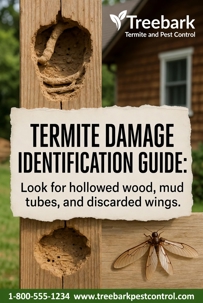
Common Signs of Termite DamageTermites often work hidden inside wood, so damage can go unnoticed until it's severe. Look for these key indicators around your home:
- Hollow-Sounding Wood
Tap on wooden surfaces (like beams, floors, door frames, or baseboards) with a screwdriver or your knuckle. If it sounds hollow, dull, or papery instead of solid, termites may have eaten the interior while leaving a thin outer layer. This is one of the most reliable early signs. - Mud Tubes (Especially for Subterranean Termites)
Check your home's foundation, crawl spaces, exterior walls, or where pipes/electrical lines enter the house. Look for pencil-thin tubes made of soil, saliva, and feces. These protect termites from drying out as they travel from the ground to wood sources. If you spot them, break one open—if live termites are inside, it's an active infestation. - Buckling, Blistering, or Sagging Wood
Floors, ceilings, or walls may warp, bubble, or sink. Paint or wallpaper can blister or peel, often mistaken for water damage. Termites create moisture as they chew, leading to these symptoms. - Frass (Termite Droppings)
Drywood termites leave small, pellet-like droppings (frass) that resemble sawdust or coffee grounds, often piling near infested wood or in window sills. Subterranean termites produce more mud-like material. - Discarded Wings
After swarming (usually spring/summer), winged termites (swarmers) shed their wings. Piles of wings near windows, doors, or light fixtures signal a nearby colony establishing itself. - Other Visible Clues
- Soft, crumbling, or damaged wood that probes easily.
- Tiny holes in drywall (from termites pushing out frass).
- A faint moldy or mildew-like smell in affected areas.
- Stuck windows/doors or squeaky floors from structural weakening.
Quick DIY Inspection Tips
- Start outside: Examine the foundation for mud tubes or cracks where termites could enter.
- Move inside: Check basements, crawl spaces, attics, and any wood in contact with soil (like support beams).
- Probe suspect areas gently with a screwdriver to avoid unnecessary damage.
- Note: Termite damage often mimics water damage or rot, so don't assume it's just moisture.
If you spot any of these signs, don't wait—termite infestations can spread quickly and cause thousands in structural repairs. A professional inspection is the best next step for accurate identification and treatment. At Treebark Termite and Pest Control, we specialize in thorough termite inspections and effective removal solutions tailored to your home. If you're in our service area and suspect termites, reach out for a free consultation or inspection—we're here to help protect your property! Just reply or contact us directly.